January 26, 2012

Would Florida Booster Laws Help Prevent Injuries in Aventura Car Accidents?

Currently, Florida is one of only three states with no booster seat laws. Most other states have legislation in place making it mandatory for parents to place children over the age of four in booster seats. California has one of the toughest laws, requiring children over the age of four to use booster seats until they are 4 feet 9 inches high or until they are eight years old (whichever comes first). The car club AAA and legislators have been pressuring Florida to pass a booster seat law, arguing that such legislation would help prevent injuries to children involved in car accidents.

The idea behind age-appropriate safety restraints is based on the premise that car safety systems – including car seat belts and air bags – are designed for adults. In fact, these same safety systems, which can help prevent an Aventura brain injury for an adult victim of a car accident, can be life-threatening to children. Since children are smaller, air bags that deflate in an accident can easily suffocate them or cause head injuries. In an Aventura car accident, seat belts can cut into a child’s neck and cause serious injuries. That is why age-appropriate safety restraints are needed.

However, the laws surrounding child safety restraints can be confusing. Small babies are placed in rear-facing infant car seat. Eventually, a child is graduated to a harnessed rear-facing seat and then to a forward-facing seat. However, when children should move from one restraint system to another is not entirely clear. Car seats are based on height, weight, and the age of a child. Since children grow at very varied rates, a child may exceed the weight measurements for a safety seat but still meet the age and height requirements for a different seat. This can be quite confusing to parents trying to make the safest choice for their children.

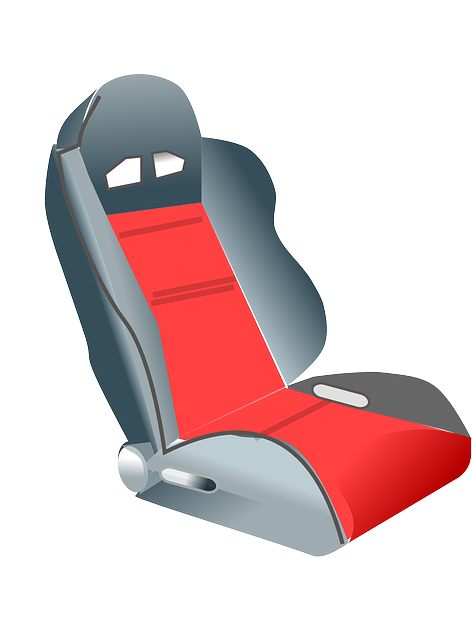
Most experts agree that children at some point should be placed in a booster seat. This is a cushion that elevates the child so that airbags and seatbelts cannot harm the child in the event of an accident. Some booster seats also come with backrests and armrests. All models are strapped into the car with the car’s seat belt. However, there is a wide range of disagreement about how long a child should be placed in a booster seat. Georgia has a law requiring all children between the ages of four and eight to be placed in a booster seat while in a car. Some experts, however, argue that children do not fit correctly and safely into an adult seat belt until they are ten or even twelve years old.

An adult seat belt that fits correctly goes across the thighs. If a seatbelt cuts across the stomach, as it does on many children, and the car is involved in an Aventura car accident, the belt can cause internal injuries. The upper part of the seat belt should be positioned across cross the center of the wearer’s chest. For smaller adults and children, the seat belt cuts across the neck, potentially causing life-threatening injuries if the car is in an Aventura traffic accident. A booster seat raises a child so that the seat belt is positioned safely. Models with head rests and back rests also cushion the head and protect it in an accident. According to SafetyBeltSafe USA, correct booster seat use for a child who does not fit correctly into a seat with a seatbelt can help reduce childhood Aventura personal injuries by as much as 45 percent in the event of an accident.

Continue reading "Would Florida Booster Laws Help Prevent Injuries in Aventura Car Accidents? " »

January 24, 2012

Would New Law Reduce the Number of Medley Car Accidents or Merely Increase Costs?

Governor Rick Scott and other legislators are currently supporting HB 119, a proposed law which would require anyone injured in a Florida car accident to seek an evaluation at a hospital or clinic. The proposed law is aimed to help reduce the instances of insurance fraud, which according to the Insurance Institute total $1 billion annually. Florida has been noted to be one of the leading locations in the country for insurance fraud, with more instances of car insurance fraud occurring here than anywhere else.

The new proposed law would take aim at insurance fraudsters in a number of ways. The law would limit the choices those injured in car accidents would have about where to seek medical treatment. This is significant because in Florida instances of insurance fraud have been found to involve large networks of unscrupulous doctors and other professionals. Fraudsters work with clinics and medical professionals who overcharge for routine exams and charge for medical exams and treatments not given. Advocates of HB 119 claim the new law would eliminate these medical fraudsters by forcing victims to go to legitimate clinics and hospitals, making it harder for overcharging to work.

There is no doubt that car insurance fraud is a serious problem. In addition to the high cost of fraud – which is passed down to all drivers in the form of increased insurance premiums – insurance fraud in Florida can be a threat to public safety, as well. In some cases, fraudsters cause a minor accident, such as a rear-end collision – in order to claim an injury. Unfortunately, this is a dangerous game, and bystanders could be seriously injured in Medley car accidents or Medley pedestrian accidents caused by a fraudster looking to cause an accident in order to make a fraudulent claim.

In addition, the instances of insurance fraud in the state are negatively affecting those who are legitimately injured in Florida traffic accidents. Some residents of Medley, for example, find that their claims are treated with some suspicion and it can take some time for legitimate claimants to get their claim amounts, even if they are genuinely injured. Some victims have worked with Medley personal injury attorneys to negotiate with insurance carriers in order to ensure a fair, on-time claim recovery.

Opponents of the law, however, claim that the new law might not be the best solution. They point out that not every car accident victim with a minor injury can afford a visit to a hospital emergency room or a clinic, and this will especially be a cost concern for those without insurance. They also note that those who really want to defraud the system will still find ways to do so. Further, opponents of the bill have expressed concerns that having car accident victims with minor injuries report to hospital emergency rooms could potentially clog up emergency departments and make it harder for those who are seriously ill to get medical care.

Continue reading "Would New Law Reduce the Number of Medley Car Accidents or Merely Increase Costs?" »

October 27, 2011

Why You Need to be Prepared for a Miami Car Accident

For many motorists in Miami, car accidents are just not a daily consideration. Many motorists assume that as long as they drive safely, their risk of being in a car accident is quite low. Unfortunately, each day, Miami truck accidents and car accidents occur to even good drivers. Statistics show that the longer a motorist is on the road, the greater their chances of being in a car accident. Since Miami is a large city with a large volume of traffic, unfortunately, the risk of Miami car accidents and traffic accidents is that much larger.

One problem is that many motorists drive far less safely than they believe. Driving while under the influence or driving while distracted can lead to a car accident – no matter how strong a driver you think you are. It is important for motorists in all cities, especially large cities like Miami, to ensure that they are driving as safely as possible. This means shutting off all mobile devices before getting behind the wheel. It can also mean occasionally taking refresher courses or getting driving skills reevaluated as necessary to ensure that you are still doing everything you can behind the wheel in order to stay safe.

Unfortunately, even being an extremely safe driver does not guarantee that you will never be in a Miami car accident. Even if you drive safely, other motorists may take risks that result in a car accident. Even if you do not drink, for example, other motorists may make poor decisions that lead to Miami drunk driving accidents that affect your vehicle as well. Learning to drive defensively is one way to ensure that you can respond quickly to avoid a collision. However, even defensive driving and excellent driving skills will not prevent all accidents.

In addition, Miami has the unfortunate distinction of being one of the cities with the highest rate of staged car accidents. Insurance fraud is unfortunately on the rise in Miami, and this means that criminals choose to get innocent motorists involved in car accidents by rear ending them, by breaking suddenly, and by engaging in other reckless behavior in order to make false insurance claims. Unfortunately, if you're targeted by an insurance fraudster, you could still sustain a serious car accident and serious injuries.

For all these reasons, it is important for all Miami motorists to be prepared for car accidents at all times. This means that you should have adequate insurance coverage, and you should have an emergency kit in your car. Your emergency kit should contain a disposable camera for taking photos of the scene, a pen and paper for taking down insurance information and contact information from the other driver, and a first aid kit that allows you to treat any minor wounds on site. Reviewing what you need to do if you are in a Miami car accident is also a smart move, and ensures that you are ready if the worst happens.

Continue reading "Why You Need to be Prepared for a Miami Car Accident" »

August 9, 2011

Uninsured and Underinsured Drivers Can be a Risk in a Florida Car Accident

According to the Insurance Research Council, one in four Florida drivers is on the road with no car insurance. Across the US, one in six drivers do not have insurance, making Florida one of the top five states in the nation when it comes to uninsured drivers. Only New Mexico, Oklahoma, Mississippi, and Alabama have a higher percentage. In addition to these numbers, many more drivers on Florida's roads are underinsured.

Underinsured and uninsured drivers pose a huge risk for all drivers. Florida mandates that all drivers carry a minimum amount of insurance, which covers medical injuries and other injuries to the driver and passenger as well as coverage for property damage to another car. Drivers are free to buy additional insurance as well. Florida law does not require drivers to buy coverage for any medical costs to passengers of the other vehicle involved in a car accident. Drivers who do not have this type of coverage are considered underinsured, since if they are in an accident, their insurance will not pay for the medical costs and injuries they cause another person.

If you are in a Florida car accident caused by an underinsured or uninsured driver, you may have considerable challenges in recovering the costs of injuries, medical expenses, property damage, and other injuries sustained in the car crash.

Florida is a "no-fault" state, meaning that victims who sustain an accident in a car accident can get compensation for medical costs and lost wages in the event of a car accident. The payout is usually quick, since insurance companies do not consider liability when assigning claim amounts. As well, payout comes from the driver's own insurance company, not from the company of the other driver. Therefore, even if the other driver is uninsured, the victim can still get some compensation. However, only small claims of under $10 000 qualify, in most cases, for no-fault benefits.

Serious accidents usually involve lawsuits and legal claims, since no fault benefits do not cover the substantial medical costs and lost income involved. In these cases, the victim will sue the at-fault driver for damages. If the at-fault driver has good insurance coverage and personal assets, the injured driver can get compensation through these means. If the at-fault driver is uninsured or underinsured, the injured driver may need to seek recovery from their own insurance company.

If you drive in Florida, you may wish to speak with your insurance provider about additional coverage that will protect you in the event of a car collision with an underinsured or uninsured driver. While many drivers are upset that they need to pay extra for someone who negligently does not obey the law in getting car insurance, the fact is that many drivers in Florida do not have adequate insurance to protect you and your family in an accident. If you are in an accident with this type of driver, having your own coverage can help pay for medical care and lost income for you and your family.

The claims process in a Florida truck accident or car accident involving an uninsured driver can be very complicated. In some cases, drivers with no insurance will leave the scene of an accident because they do not want to admit that they have broken the law and not taken out car insurance. For these reasons, it is important to secure a Florida car accident attorney immediately after your accident if you believe that the other driver is uninsured or underinsured.

Continue reading "Uninsured and Underinsured Drivers Can be a Risk in a Florida Car Accident " »

June 28, 2011

Florida Car Accidents Involving Golf Carts

According to the National Golf Cart Association, golf carts are becoming a very popular mode of transportation – and not just on the course. Many people are in fact using the golf carts on public roads, in order to run errands or just to get around. Thanks to increasing gas prices and an increasing number of retirees, there is a huge growth in golf cart use, especially in residential areas. In fact, in some Florida residential communities, golf carts are a more popular form of transportation than cars.

Unfortunately, there is also growing concern about the number of car accidents involving golf carts. According to a research study completed at the University of Alabama at Birmingham, between 2002 and 2005, there were 48,000 golf cart-related injuries reported across the US. Men between the ages of 10 and 19, as well as people over the age of 80, were most likely to be in these types of accidents. According to police authorities, the National Golf Cart Association, and other experts have several suggestions for preventing these types of injuries:

1) Create new rules and safety instructions. According to the University of Alabama at Birmingham study, safety instructions are not adequately provided by golf cart retailers and manufacturers. Researchers felt that such instructions as well as safety standards for golf cart users would help to prevent accidents.

2) Create educational awareness programs for drivers and golf cart users alike. According to authorities, many golf cart users treat golf carts just like cars, and this can be dangerous. According to experts, golf carts should not be used of higher-traffic or higher-speed roads and even a turn at 11 mph can cause a golf cart user to be ejected from the cart. Drivers must also be taught to share the road with golf cart users and to be aware that such vehicles may be sharing some roads.

3) Enforce traffic rules and keep statistics. Many municipalities do not keep records of golf cart accidents, the way they do for Florida truck accidents and car accidents. More careful record keeping and stricter enforcement of rules for both golf cart users and drivers can help prevent many accidents.

Continue reading "Florida Car Accidents Involving Golf Carts" »

April 12, 2011

Two Bills in Florida Could Affect Car Accident and Florida Products Liability Cases

Two bills have been introduced in the Florida Legislature which would allow drivers and product manufacturers to share liability in products liability cases. These bills would let juries hear evidence about any role the driver played in causing a Florida car accident, even if the accident was partly caused by a defective automotive product.

Currently, Florida laws place the liability of defective products with manufacturers. Therefore, if under current laws a driver is in a car accident in a car with a defective part, only the manufacturer is held liable – not the driver. This is seen as the risk of doing business in the industry.

The two laws, including Senate Bill 142, have already been approved by Senate. Senate Bill 142 would make changes to Florida Statutes § 768.81. If passed, the bill would require juries in automotive products liability cases to consider the potential liability and fault of all parties – including the driver – before determining the distribution of damages.

Bill HB201 has already been given approval by the Florida House Civil Justice Subcommittee. This bill will allow evidence of fault to be presented in all automotive products liability cases in Florida where no defective product can be defined. This bill will allow liability to be allotted to all parties found to be partly responsible to the accident.

The bills have caused some debate. Some feel that the bills are fair because they take into consideration driver negligence rather than assigning all fault to manufacturers. However, some attorneys have expressed concerns that if passed the new legislation will deflect attention from poorly made or defective automotive parts by blaming drivers.

Continue reading "Two Bills in Florida Could Affect Car Accident and Florida Products Liability Cases" »

March 15, 2011

Older Drivers and Florida Car Accidents

Viral videos online and media news stories sometimes give the impression that older drivers are unsafe drivers. In fact, some states have special rules for older drivers, which require them to get re-tested for their license every few years. Rules such as this as well as popular perceptions of drivers have provoked a lot of controversy.

Although driving is considered a privilege, in today's society it is considered very important for personal freedom. Driving allows people to remain independent, to work, and to remain active in their communities. It also ensures that they are not isolated. At the same time, however, it is important to keep everyone safe by removing unsafe drivers from the road. However, experts often disagree about whether tests for older drivers are age discrimination or simple safety precautions.

Some claim that testing for older drivers just makes sense because it ensures that dementia, vision loss, and other age-related problems do not affect driving skill. These experts believe that because drivers are so dependant on driving they may not readily surrender their privileges even if they have problems which can affect their driving. They also note that other high-risk groups – such as young drivers – have additional restrictions in place to keep accident rates low.

Other experts claim that elderly drivers do not have a worse driving record than any other age group and such tests do not necessarily remove unsafe drivers from the road. They also claim that drivers who are elderly may prematurely give up driving rather than submit to testing, even if they are safe on the road. Finally, some experts claim that if other age groups do not have submit to testing, elderly drivers should not have to submit to retesting, either.

In Florida, drivers over the age of 80 must take a vision test when applying to renew their license. There are 2 million drivers in Florida over the age of 65 and there are 250 000 drivers in the state older than 85. According to the Florida Department of Motor Vehicles, in 2009, 5928 drivers between the ages of 80 and 90 were involved in Florida car accidents. There were 116 fatalities caused by these accidents. That year, Florida had 629,699 drivers 80-90 years of age.

Continue reading "Older Drivers and Florida Car Accidents" »

March 1, 2011

Groups Want DUI Laws Changed to Prevent Florida Drunk Driving Accidents

Under current state laws, drivers who may be responsible for fatal Floirda car accidents do not always needed to be tested for drugs and alcohol. Some groups want to see those laws changed, claiming that legislation changes can help prevent Florida drunk driving accidents.

Under current laws, police need to have a reasonable suspicion or a probable cause to believe that a driver in a fatal car accident is drunk or using drugs before administering a drug or alcohol test. In other states, drivers who cause fatal accidents are required to submit to a blood test to determine whether alcohol or drugs were a factor in the crash. Currently, this is not the case in Florida.

According to some experts, this legislative environment can mean that drunk drivers are released early, to re-offend. For example, if a driver causes a Florida truck accident and is not tested for drugs and alcohol but is driving impaired, that driver will likely receive a lighter sentence than they would have received if it was known that they were driving impaired. This means that they will be free to re-offend sooner. Without a law requiring all drivers causing car accidents to be tested, there is simply no way to know how many car accidents are truly related to impairment.

Groups and families who have lost loved ones to Florida car accidents have been working to get laws passed which would allow all surviving drivers in fatal car accidents to be tested for drugs and alcohol. There are petitions to change the law as well as media attention on the topic. However, so far there has been little push to change the law.

Groups have been pushing to change the Florida law since 2006, but they claim that some groups, including defense attorneys, have objected to the regulation change. Some defense attorneys feel that any such law would be excessively intrusive and would be unconstitutional. They also note that currently drivers have the option to take a blood test, although drivers have to pay for this test themselves and the test is completely mandatory.

Continue reading "Groups Want DUI Laws Changed to Prevent Florida Drunk Driving Accidents " »

February 24, 2011

Scooters and Florida Car Accidents

While most Florida pedestrian accidents and car accidents involve cars, the increased presence of scooters on city streets and pedestrian areas has created a whole new hazard and legal question – one that is difficult o resolve. Scooters, also known as EMDs (electric mobility devices) are showing up in greater numbers to help those who are too elderly, too ill, and too obese to walk easily.

The difficulty with scooters is that they are an in-between entity. Those who ride scooters are not exactly pedestrians and not drivers, either. Under Florida laws, these devices do not require registration or licensing. However, these devices can cause serious accidents if they run into a pedestrian. When drivers use scooters in the roads, they can also cause Florida car accidents.

Currently, auto insurance is not applicable to EMDs and homeowners insurance does not cover any accidents or injuries caused by these devices outside the home. Worse, many who use scooters are in fact using them in ways they should not be used. Manufacturers of EMDs state that scooters should not be used on the roads and Medicare only pays for EMDs if they will be used indoors only. Drive-thru restaurants will not serve people on EMDs due to concerns about liability issues. However, many people who use scooters do use them in sidewalks, in parking lots, and even on the roads. In the event of an accident, this raises further complicated questions about liability.

There have been a number of well-reported scooter accidents across the US over the past year and this has prompted many people to discuss possible ways to insure EMDs. There has been discussions as well about ways to define scooter users legally and possible legislation which can be put in place to protect the public.

In Florida, a recent high-profile case involves a 73-year old EMD driver who got intoxicated and drive home on his scooter, only to be struck down by a car. He was issued a ticket as a pedestrian – for walking out in front of a car. The case underscores the lack of regulations concerning EMDs. While drivers of cars have rules and laws they must follow to prevent Florida drunk driving accidents, there are no laws preventing scooter users from driving drunk.

Scooters can also pose a serious hazard to pedestrians and can cause Florida pedestrian accidents and bicycle accidents when the devices are used on sidewalks and pedestrian trails. EMDs are quite wide and can move quickly. If they collide with a bicyclists or pedestrian, serious injuries are the likely result due to the bulk and the speed of the scooter. Currently, however, anyone who is injured by a scooter must seek recovery through civil court because there are too few laws in place protecting pedestrians, car drivers, and scooter users.

Continue reading "Scooters and Florida Car Accidents" »

February 17, 2011

Could Slow Driving Contribute to Florida Car Accidents?

Sen. Mike Bennett from Bradenton has introduced a new bill which would allow Florida drivers to get ticketed for driving too slowly in the left lane. According to proponents of the bill, slow drivers in the left lane contribute to Florida pedestrian accidents and car accidents by creating traffic problems and instigating road rage that leads to aggressive driving.

According to statistics, drivers who drive too slowly in the left lane cause traffic delays, which then causes other drivers to become more aggressive in order to pass them. Slow drivers cause other drivers to speed up and weave around them experts say, creating unsafe conditions for everyone. Supporters of the bill say that the new law would make drivers more courteous.

Those who oppose the bill say that the law would punish law-abiding drivers. Some opponents also note that the real danger in most situations are speeding drivers and aggressive drivers – not drivers driving at or below the speed limit. Some opponents claim that the law sends the wrong message – to speed up rather than slow down – while other opponents claim that the law is just another way to ticket drivers.

Under current Florida legislation, drivers can only drive in the left lane when passing. However, this rule is not strictly enforced. Opponents of the current bill note that the new law would not be needed if the current legislation were better enforced. If the new bill does pass, it could become law as early as July of this year. Under the new law, drivers caught going too slowly in the left lane would get a ticket and fine of $143.

No conclusive studies have been done to determine whether reducing slow drivers in the left lane would reduce Florida car accidents. Supporters of the new bill note that it is just common sense to ticket drivers who are breaking current legislation and driving in the left lane. Opponents of the bill believe that the new law might not help prevent Florida car accidents.